On this page
HSE describes health and safety passport schemes as a useful way for employers to check that someone working on their premises, or on their behalf, has received basic health and safety awareness training. HSE does not normally approve or endorse individual schemes, and it encourages organisations to recognise different schemes when they are confident the training matches the work. It is clear that a passport is not an assurance of competence, not a substitute for job or site-specific information, and not a substitute for effective management and supervision on site.
HSE's position at a glance
HSE's guidance on health and safety passport schemes sets out a balanced view. Passports are useful, but they are one part of how employers manage health and safety, not the whole of it.
| HSE says a passport is... | HSE says a passport is not... |
|---|---|
| A useful way to check that someone has received basic health and safety awareness training | An assurance of an individual's competence |
| Applicable to people working on your premises or doing work on your behalf | A substitute for giving job or site-specific information |
| Something organisations can recognise across different schemes, where confident the training fits the work | A substitute for effective on-site management or supervision |
HSE does not endorse individual schemes
HSE states that it does not normally approve or endorse individual passport schemes. Any scheme that claims to be "HSE approved" should be treated with care. What HSE encourages is for organisations to recognise different schemes where they are confident those schemes represent the level of health and safety awareness the work requires.
For employers, that means the decision about which passports to accept is yours. Base it on whether the scheme's content matches the hazards on your sites.
What this means for employers
Use passports to set a baseline. A passport requirement makes sure everyone arriving on site has had recognised awareness training. That is exactly what HSE says passports are good for.
Check competence separately. For skilled or higher-risk work, you still need evidence that the person can do the job safely: qualifications, tickets, experience and the contractor's own management of its people.
Keep giving site-specific information. Your induction, briefings and permits must still cover your site's hazards and rules. A passport holder still needs to know where your hazardous areas are and what to do in an emergency.
Supervise the work. HSE is clear that a passport does not replace management and supervision on site. The level of supervision should match the risk.
Choose schemes that fit your hazards. HSE suggests looking at whether a passport covers what is relevant to your business. A sector passport written for your industry, such as the SPA Petrol Retail passport for forecourts, will cover hazards that a general course does not.
What this means for contractors
Holding a passport does not mean you can skip the site induction or work without supervision. It means you arrive with the basics already covered, so the site can spend its time on what is specific to it. Expect to be inducted, briefed, issued permits for higher-risk work and supervised, even with a passport in your pocket.
What to look for in a passport scheme
HSE's guidance suggests that anyone setting up or relying on a passport scheme should make sure, as far as possible, that the training is relevant and of good quality. In practice, look for:
- Content written for your industry's hazards, ideally with the industry itself
- Assessment that checks understanding, not just attendance
- Accredited, audited training providers, so the standard is the same wherever the course is taken
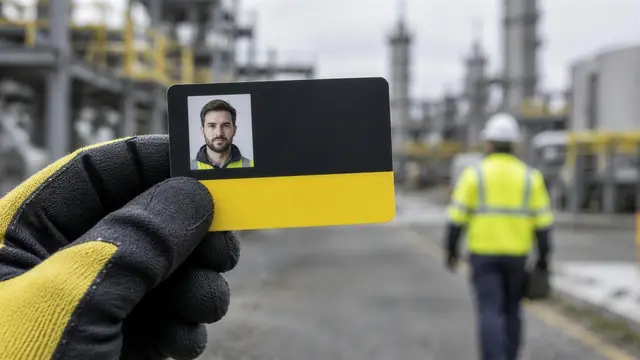
- A card that can be verified, with a photograph, a unique ID and expiry dates
- Renewal, so knowledge is refreshed regularly
SPA passports are delivered by accredited providers who are audited every year, assessed module by module, and recorded on a national register that employers can check.
How SPA passports fit HSE's view
SPA passports are designed as the baseline HSE describes. They give employers confidence that every contractor has received the same awareness training for their industry, verified on a card that can be checked. They are not presented as proof of competence, and they are designed to sit alongside site inductions, permits and supervision, not replace them. Read our guides on contractor management and contractor inductions to see how the pieces fit together.
Putting HSE's view into your contractor rules
HSE's position translates neatly into contractor conditions. Many sites use wording along these lines:
All contractors working on site must hold a valid [named] safety passport for the relevant sector, which will be checked on arrival. The passport demonstrates basic health and safety awareness only. Contractors must also provide evidence of competence for the work, attend the site induction, comply with site rules and permit arrangements, and work under the supervision arrangements agreed for the job.
That one paragraph sets the baseline, makes clear what the passport does and does not prove, and keeps induction, competence and supervision in place.
Why passports became common
Passport schemes grew in industries with large, mobile contractor workforces: forecourts, food manufacturing, quarries, engineering construction and utilities. In those industries, the same contractors visit many sites run by different companies. Without a common standard, each company trains and assesses the same people separately, wasting time and producing inconsistent results. A shared passport fixes that, which is why HSE sees passports as useful, while still expecting employers to manage the risks on their own sites.
Frequently asked questions
Does HSE approve safety passport schemes?
HSE does not normally approve or endorse individual schemes. It encourages organisations to recognise schemes they are confident match the level of awareness the work needs.
Is a safety passport proof of competence?
No. HSE states that a passport is not an assurance of an individual's competence. It shows basic health and safety awareness training.
Do passport holders still need a site induction?
Yes. HSE states that a passport is not a substitute for job or site-specific information.
Should I accept more than one passport scheme?
You can. HSE encourages organisations to recognise different schemes where they are confident the training is suitable for the work.