On this page
A permit to work is a written system that controls higher-risk work by setting out exactly what will be done, the hazards, the precautions and who is authorised, before the work starts. On a petrol forecourt, permits are normally needed for work that could introduce an ignition source into a hazardous zone, open up the fuel system, or involve confined spaces, excavation or hot work. A clearance certificate confirms that an area or piece of equipment has been made safe, for example cleaned and freed of flammable vapour, before work begins.
What is a permit to work?
A permit to work is a formal, written system used to control work that carries serious risk. HSE's guidance on permit-to-work systems (HSG250) describes it as a system that sets out the work to be done and the precautions to be taken, so that everyone involved understands the hazards and the controls.
A permit is a process, and the form is only the record of it:
- The work is planned and the hazards identified.
- An authorised person checks that the area is safe and the precautions are in place.
- The permit is issued to the person in charge of the work, who accepts it.
- The work is carried out within the limits of the permit.
- When the work is finished, the area is checked and the permit is handed back and cancelled.
At each stage, someone signs to confirm that their part is done. That written trail is what makes a permit system work.
When is a permit needed on a forecourt?
Each forecourt operator sets its own rules, but permits are typically required for:
- Hot work in or near a hazardous area: welding, cutting, grinding, brazing or anything that produces heat or sparks
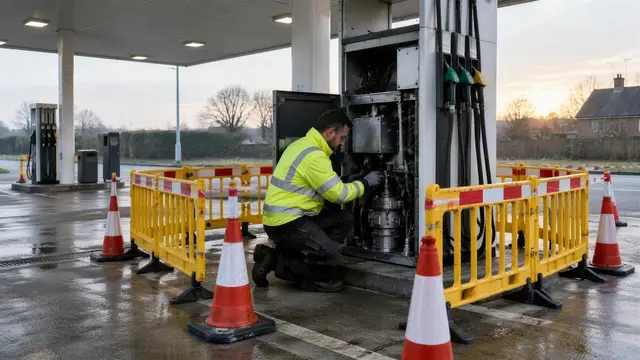
- Work on the fuel system: opening tanks, lines, dispensers or vapour recovery equipment
- Electrical work in hazardous areas or on equipment serving them
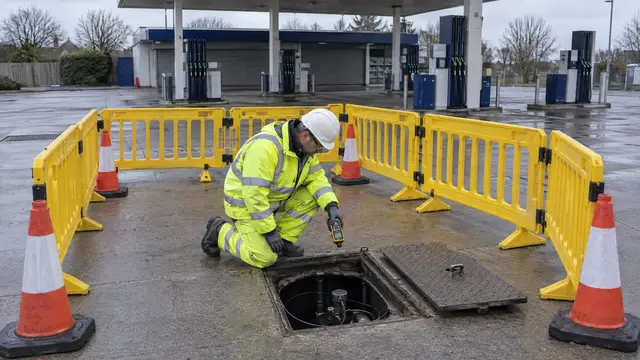
- Confined space entry, such as entering a tank or a deep chamber
- Excavation near tanks, pipework or underground services
- Work that changes the site's normal safety arrangements, such as isolating emergency stops or taking dispensers out of service
Lower-risk tasks away from hazardous areas may only need a method statement and the site briefing. If in doubt, ask before you start.
What a forecourt permit contains
A permit to work will normally record:
- The site, the exact location and the equipment involved
- A clear description of the work and its limits
- The hazards, including hazardous zones, fuel and vapour, vehicles and members of the public
- The precautions: isolations, barriers, gas testing, firefighting equipment, PPE
- Any certificates the work depends on, such as a clearance certificate
- The time the permit is valid from and to
- Names and signatures of the issuer and the person accepting the permit
- Hand-back and cancellation sections
Never start work beyond what the permit describes. If the job changes, stop and get the permit reviewed.
What is a clearance certificate?
A clearance certificate is written confirmation from a competent person that an area or piece of equipment is safe for a specified task. On a forecourt, the most common example is confirming that a tank, pipe or chamber has been cleaned and freed of flammable vapour so that work such as entry or hot work can take place.
Clearance is based on testing. The atmosphere is checked with suitable gas detection equipment, and the certificate records what was tested, the results and any limits. Because conditions can change, the certificate applies only to the work, place and time it describes. Some work also needs continuous gas monitoring while it is under way.
The SPA Petrol Retail passport covers clearance certificates and permits to work in the module on controlling work on a forecourt.
Hot work on a forecourt
Hot work is one of the highest-risk activities on a petrol station, because it brings a deliberate ignition source onto a site full of flammable vapour. Typical precautions include:
- Making sure the work area is outside hazardous zones, or that the zone has been made safe and confirmed by testing
- Covering or sealing drains, chambers and other points where vapour could collect
- Stopping fuel deliveries and, where necessary, taking nearby dispensers out of use
- Having suitable fire extinguishers ready and a fire watch during and after the work
- Keeping the area clear of members of the public
These decisions are made by the site's permit issuer, not by the contractor on the day.
Method statements and risk assessments
Before a permit is issued, the contractor will usually be asked for a risk assessment and a safety method statement for the job. These explain how the contractor will do the work safely, in what order, with what equipment and what controls. The permit then turns the plan into authorised work on that day. The Petrol Retail course covers safety method statements, documentation and communication for exactly this reason.
Contractor responsibilities under a permit
- Read and understand the permit before signing to accept it
- Brief your team on its contents and limits
- Do only the work described, in the place described, within the time allowed
- Keep the permit available at the work area
- Stop work and tell the site if anything changes or a precaution fails
- Leave the area safe and hand the permit back properly when finished
A worked example: replacing a dispenser hose
Even a routine job shows how the layers fit together.
- Before the visit, the contractor sends a risk assessment and method statement for replacing the hose. The engineer holds an in-date SPA Petrol Retail passport.
- On arrival, the site checks the passport, gives a briefing and confirms the dispenser's position in the hazardous area drawing.
- The permit issuer confirms the dispenser will be isolated and taken out of use, barriers will be set up around it, and no delivery is due during the work. These precautions are written onto the permit.
- The engineer accepts the permit, briefs anyone else involved and starts work only once isolation and barriers are in place.
- If a delivery tanker arrives early, the engineer stops and checks with the site before continuing.
- When the job is done, the engineer tests the equipment as required, leaves the area tidy, and hands back the permit. The site restores the dispenser to service and cancels the permit.
Why permit systems fail
Investigations into incidents involving permits tend to find the same problems:
- The permit described a different job from the one actually done
- Precautions were written down but never put in place
- Several permits on one site conflicted with each other
- The permit was not handed back, so equipment was restored while work was still going on
- People signed without reading
A permit is only as good as the conversation behind it. Treat each signature as a check, not a formality.
Frequently asked questions
Who issues a permit to work on a forecourt?
An authorised person nominated by the site operator or its principal contractor. Contractors accept the permit but do not issue it for their own work.
Is a permit needed for every job on a forecourt?
No. Permits control higher-risk work. Lower-risk tasks away from hazardous areas are usually controlled by the site briefing, a risk assessment and a method statement. The site's rules decide which jobs need a permit.
What is task classification on a forecourt?
It is the process of grading work by risk so the right controls are applied, including whether a permit is needed. The SPA Petrol Retail course covers it alongside permits and clearance certificates.
What happens if conditions change during permitted work?
Stop the work, make the area safe and tell the permit issuer. The permit may need to be reviewed or reissued before work restarts.