CHRISTMAS AND NEW YEAR OFFICE CLOSURE: The office will close at 12.00pm Thursday 24th December 2015 and reopen at 8.30am on Monday 4th January 2016. Wishing you a Happy Christmas and Best Wishes for the New Year from all at Safety Pass Alliance.




























A company which manufactures office equipment has been fined after a trainee worker was injured when he was crushed by a metal folding machine.
Newport Magistrates’ Court heard how an employee of F C Brown (Steel Equipment) Limited of Newport had entered the guarded area of a metal folding machine to fix a fault. Whilst in this area he was crushed between the fixed body of the machine and the machine’s moving manipulator arm, causing serious injury.
The incident shattered all of the worker’s right-hand side ribs and broke two ribs on his left side. He was in hospital for two months.
An investigation by the Health and Safety Executive (HSE) into the incident, which occurred on 21 May 2014, found that there was insufficient measures taken by the company to control the risks associated with its maintenance activities.
F C Brown (Steel Equipment) Limited, of Caswell Way, Reevesland Industrial Estate, Newport, was fined a total of £14,000, with costs of £9,401, after pleading guilty to an offence under Section 2(1) of the Health and Safety at Work etc Act 1974.
Speaking after the hearing, HSE inspector Lee Schilling said: “The injury could easily have been avoided had F C Brown (Steel Equipment) Limited provided sufficient training and an adequate level of supervision to make sure safety measures were in place when machinery maintenance activities were being undertaken.”
For more information about machinery maintenance visit: http://www.hse.gov.uk/work-equipment-machinery/maintenance.htm[1]
 [3]
[3]Following a recent meeting at Safety Pass Alliance with some key members of the Food Industry and experienced trainers. We are pleased to announce that the new Food and Drink Sector Package V5 is in development. Updates will be announced in the new year.
Roofing and insulation firm IKO Plc has been prosecuted after a worker suffered arm injuries while at work.
Graeme Myers, 48, from Belper, who was self-employed, was lubricating a chain on an auto-plant machine at Prospect Quarry in Matlock on 2 July 2014 when he reached over a fence at the end of the machine. The machine was still running and the pusher block used to transport empty trays moved forward striking his arm.
Mr Myers required immediate surgery to close the wound to his arm and he has been left with muscle loss and nerve damage. He was unable to work for three months.
Chesterfield Magistrates Court heard that the fence height should have been enough to prevent access to the pusher block and other dangerous parts of the machine. However when IKO Plc moved the machine from its previous location it failed to identify the change in floor level which reduced the height of the guard, allowing access to the dangerous parts.
IKO Plc of Appley Bridge, Wigan pleaded guilty to breaching Regulation 11 (1) of The Provision and Use of Work Equipment Regulations 1998 and were fined £10,000 and ordered to pay costs of £2331.21 and a victim surcharge of £120.
Speaking after the hearing, Health and Safety Executive Inspector Lyn Spooner said: “This was a very simple case where IKO Plc had overlooked the conditions of its new site in its risk assessment and as a result failed to identify the reduced height of the fence guard, allowing access to dangerous parts of the machine. It was an obvious risk, and as a result one their workers was seriously injured.
“Companies must prevent access to dangerous parts of machinery in order to prevent serious injury and in cases like this there are often simple measures that could and should have been taken to prevent the accident occurring ”
[2]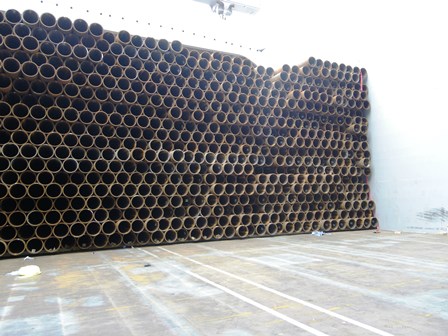
[1]
A north east port has been fined £400,000 following the death of an agency worker who fell eight metres onto the steel deck of ship’s hold at Hartlepool Dock
Robert Harrison, 59, from Middlesbrough, was one of six men who were loading 12m long steel pipes into the hold of a vessel at PD Teesport Ltd, at Hartlepool Dock, in Cleveland Road, Hartlepool, when the incident happened on 9 September 2012.
The incident was investigated by the Health and Safety Executive (HSE), which prosecuted PD Teesport Ltd for serious safety failings.
Teesside Crown Court heard how Mr Harrison, an agency worker, and his colleagues were standing on top of the stack of pipes. The stack increased in height as more pipes were loaded in to the hold using a dockside crane to lift and lower them into position in the ship’s hold.
Mr Harrison fell from the exposed edge of the stack of pipes, landing onto the steel deck of the hold eight metres below. He later died in hospital as a result of his injuries.
The HSE investigation found that there were exposed edges at either end of the pipes, ie, between the ends of the pipes and the bulkhead of the vessel and also the open edge, and the company did not provide appropriate measures to prevent or minimise the risks from falls.
PD Teesport Limited, of Queen’s Square, Middlesbrough, was fined £400,000 and ordered to pay £107,684.40 costs after pleading guilty to breaching Section 3(1) of the Health and Safety at Work etc Act 1974.
After the hearing, HSE inspector Cain Mitchell said: “Robert Harrison, a father of three, lost his life needlessly because of the failure by PD Teesport Ltd to put effective safety measures in place.
“This was a tragedy that could have very easily been prevented. The company should have properly assessed the risks and ensured appropriate measures were in place to reduce the risks of falling. The risk of a fall from an 8 metre stack of pipes was obvious. These precautions could have included the use of soft landing systems such as an air bag or cushion, which would have ensured no significant injury could result from a fall.”
More information about working at height safely can be found on the HSE website at: http://www.hse.gov.uk/work-at-height/index.htm[2]
Norfolk Range’ large wheeled dry powder fire extinguishers manufactured before 2009 by UK Fire International Ltd
| Health and Safety Executive – Safety Alert | |
|---|---|
| Department Name: | Hazardous Installations Division, CEMHD, unit 1C |
| Bulletin No: | HID 1-2015 |
| Issue Date: | 12 August 2015 |
| Target Audience: | All premises where large dry powder fire extinguishers are likely to be used for example: chemical industry, offshore industry, merchant shipping, nuclear industry, manufacturing, mining, warehousing, engineering, metals and minerals processing and production. |
| Key Issues: | ‘Norfolk Range’ large dry powder fire extinguishers, manufactured before 2009, may be affected by moisture ingress at a threaded joint at the base of the unit, rendering the unit inoperable. The problem may not be identified during routine service inspections.
|

[1]Photo 1: Type of unit covered by this alert
At a recent fire on a chemical plant, three wheeled dry powder fire extinguishers, containing 45kg of Monnex dry powder, failed to discharge when activated. This safety alert relates to dry powder units manufactured between 1970 and 2009. An identifying feature of these units is that the discharge hose is coupled at the base of the unit via a threaded metal elbow joint.
Photograph 1 shows the type of unit covered by this alert.
If you are unsure if your units are affected by this safety alert, consult Britannia Fire Ltd.
The units operate by opening a CO2 cylinder attached to the body of the extinguisher. The main body of the extinguisher holds the dry powder. The powder is discharged through a hose and is pushed out by the pressure of CO2. The units in scope of this alert have a discharge hose attached to the base of the body of the extinguisher by a piped metal elbow.

[2]Photo 2: Rusted joint and caked powder from unit that failed to operate
HSE examined three of the above units that failed to operate. Each had rust visible on the inside of the elbow joints. The extinguishers had been kept outdoors under plastic covers and had been serviced every six months. The service engineers had noted the rust but it was not thought to affect the operation of the units.
The flexible discharge hose is normally removed during servicing however the elbow joint is not usually disturbed. It is believed that water ingress at this joint resulted in caking of the dry powder within the elbow joint. The caked powder may fall back from the discharge tube into the body of the extinguisher and so not seen during basic servicing. Upon activation of the extinguisher, the caked powder can block the discharge hose and render the unit inoperable.

[3]Photo 3: Post 2009 model with discharge hose on top
Photograph 2 shows the rusted joint and caked powder from a unit that failed to operate. When the flexible discharge hose was removed the blockage was not visible. It was only identified when the elbow was removed from the body of the extinguisher.
The revised design of ‘Norfolk Range’ extinguishers produced by Britannia Fire Ltd is not affected by this problem. The design of the later versions features hoses mounted to the top of the unit, as shown in photograph 3.
[4][5]Please pass this information to a colleague who may have this Product/ Equipment or operate this type of system/process.
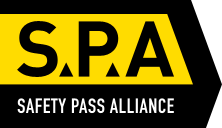
A saw mill in Kettering was fined after an employee suffered a serious injury to his left hand.
The agency worker, was working at Brigstock saw mill on 14 August 2014 when his hand was drawn into the rotating blade of an inadequately guarded large band saw.
Northampton Magistrates’ Court heard on Tuesday 6 October 2015, that the agency worker had been working on the saw with another employee and he had been levering the material being fed to the saw using a crow bar when he slipped and his left hand was drawn into the blade. His ring finger was badly damaged and later required plastic surgery.
An investigation by the HSE found the company had failed to ensure that effective measures were taken to prevent access to the dangerous parts of the saw.
Following the accident, Brigstock Saw Mill has installed a protective wooden box to ensure that operators are not able to stand within close distance to the blade of the saw.
Midlands Renewable Fuels LLP (Brigstock saw mill), was fined £5,000 with costs of £876.50 and a £175 victim surcharge, after pleading guilty to breaching Regulation 11 of the Provision and Use of Work Equipment Regulations 1999.
After the hearing, HSE inspector Jenna McDade, said:
“Had the company taken suitable measures to ensure workers did not come into contact with the rotating blade, this incident would have been easily prevented. Had the saw been properly guarded, the agency worker would not have been injured.”
Notes to Editors:
[3]A Stockport laundry firm has been fined after an employee fell through a mezzanine floor onto an industrial iron, sustaining third-degree burns.
The 34 year old man, a father of one, was in hospital for six weeks after the incident at Vineshield Professional Services Ltd in November 2013.
Trafford Magistrates’ Court heard (11 September) that an investigation by the Health and Safety Executive (HSE) found the company had failed to monitor the condition of the floor and did not ensure that it was of a suitable construction for the environment in which it was used.
Witnesses provided evidence to HSE that there were leaks in the roof which went onto the wooden floor and metal patches were found in several places where there were holes in the wood.
HSE inspector Helen Jones, speaking after the hearing, said:
“Vineshield Professional Services failed to carry out checks to ensure the floor was safe to work on. This was of importance due to the heat and steam generated in the working environment. An industrial iron giving off steam was situated directly underneath the mezzanine floor. The injured worker was severely burnt and had to undergo very painful treatment in hospital.”
Vineshield Professional Services Ltd, of Baxall Business Centre, Adswood Industrial Estate, Stockport, pleaded guilty to breaching Section 2(1) of the Health and Safety at Work Act 1974 and Regulation 12(1) of the Workplace (Health, Safety and Welfare) Regulations 1992. It was fined £20,000, plus £7,915.50 costs.
[2]An automotive components company from West Midlands has been fined for safety failings after an employee suffered crush injuries after entering a guarded area of a machine.
Nuneaton Magistrates’ Court heard how on 30 September 2014 an employee of International Automotive Components Limited of Coleshill was maintaining a carpet forming machine. The employee had only been in the job for two weeks after being promoted from operator to tool changer.
While under supervision, the employee became trapped when the top hood of the carpet heating press descended on him while he was working.
International Automotive Components Company Limited, of Gorsey Lane, Coleshill, West Midlands was fined a total of £7,000, and ordered to pay £2,190 in costs after pleading guilty to an offence under Section 2(1) of the Health and Safety at Work etc. Act 1974.
Speaking after the hearing HSE Inspector John Glynn said: “It is no exaggeration to say the employee has been extremely fortunate to escape death in this incident.”
For more information about machinery safety log onto the website at
http://www.hse.gov.uk/toolbox/machinery/safety.htm[1]
Notes to Editors:
[3]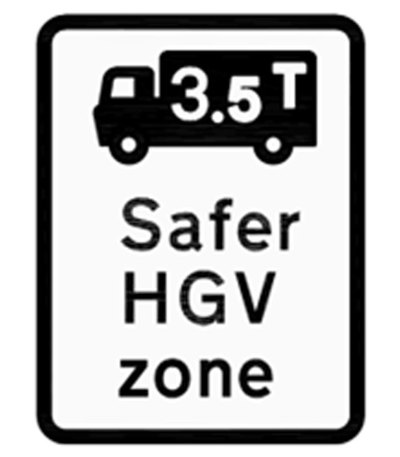 This signage will be installed at the boundaries of the scheme
This new scheme uses a combination of powers held by these bodies to deliver a simple, quick and complete solution across all roads in London.
The scheme ensures that only lorries with basic safety equipment fitted will be allowed on London’s roads. Under London’s scheme, most vehicles that are currently exempt from national legislation for basic safety equipment will have to be retrofitted. This includes construction vehicles, which are involved in a disproportionate number of fatal collisions involving cyclists and pedestrians.
Under the scheme, vehicles over 3.5 tonnes that are currently exempt will be required to:
The scheme will operate across London, 24 hours a day, seven days a week, covering the same area as the Low Emission Zone (see a map of this area). It will come into force on 1 September 2015.
The scheme will be enforced by the Metropolitan Police Service, City of London Police and the Driver and Vehicle Standards Agency.